


Understanding Transparent Cylindrical Acrylic Rods: Structure, Production and Applications
Transparent cylindrical materials are widely used in daily life, industrial manufacturing and scientific research. The rods shown in the images display various diameters and internal structures typical of acrylic (PMMA) or optical-grade resin rods. This article explains their material characteristics, manufacturing methods, surface and internal differences, and common application fields.
What Materials Are These Transparent Rods?
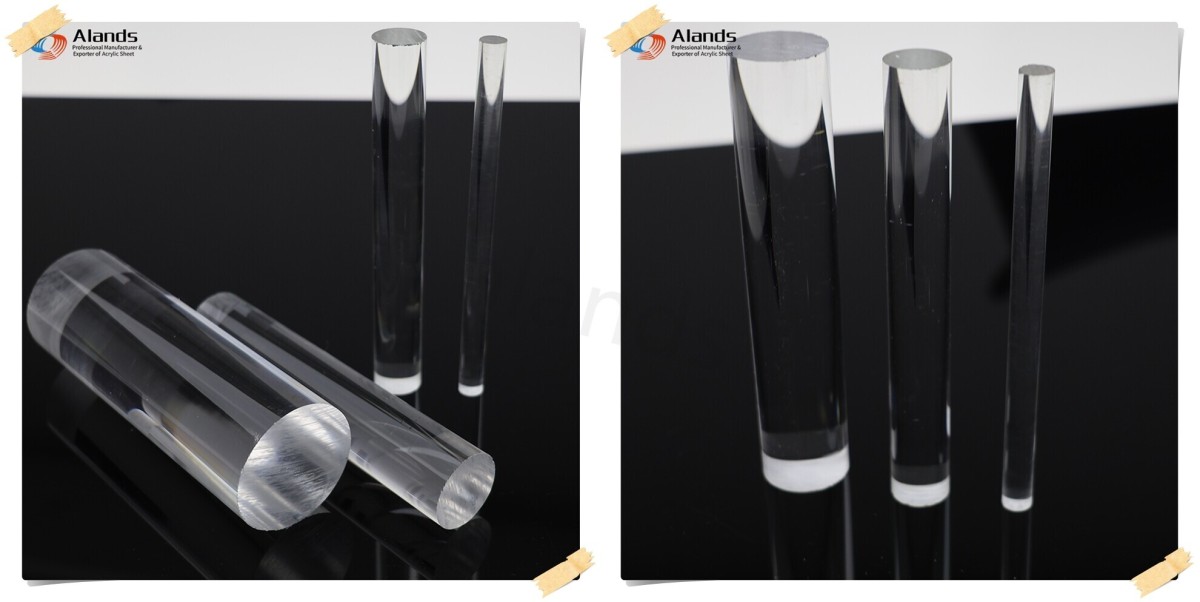
The rods are highly transparent, smooth, polished, and nearly colorless, which matches the characteristics of acrylic rods. Acrylic, or PMMA, is known for its excellent optical transmittance of up to 92 percent, making it a widely used lightweight transparent solid.
What Visual Details Reveal About the Rods
Different Diameters
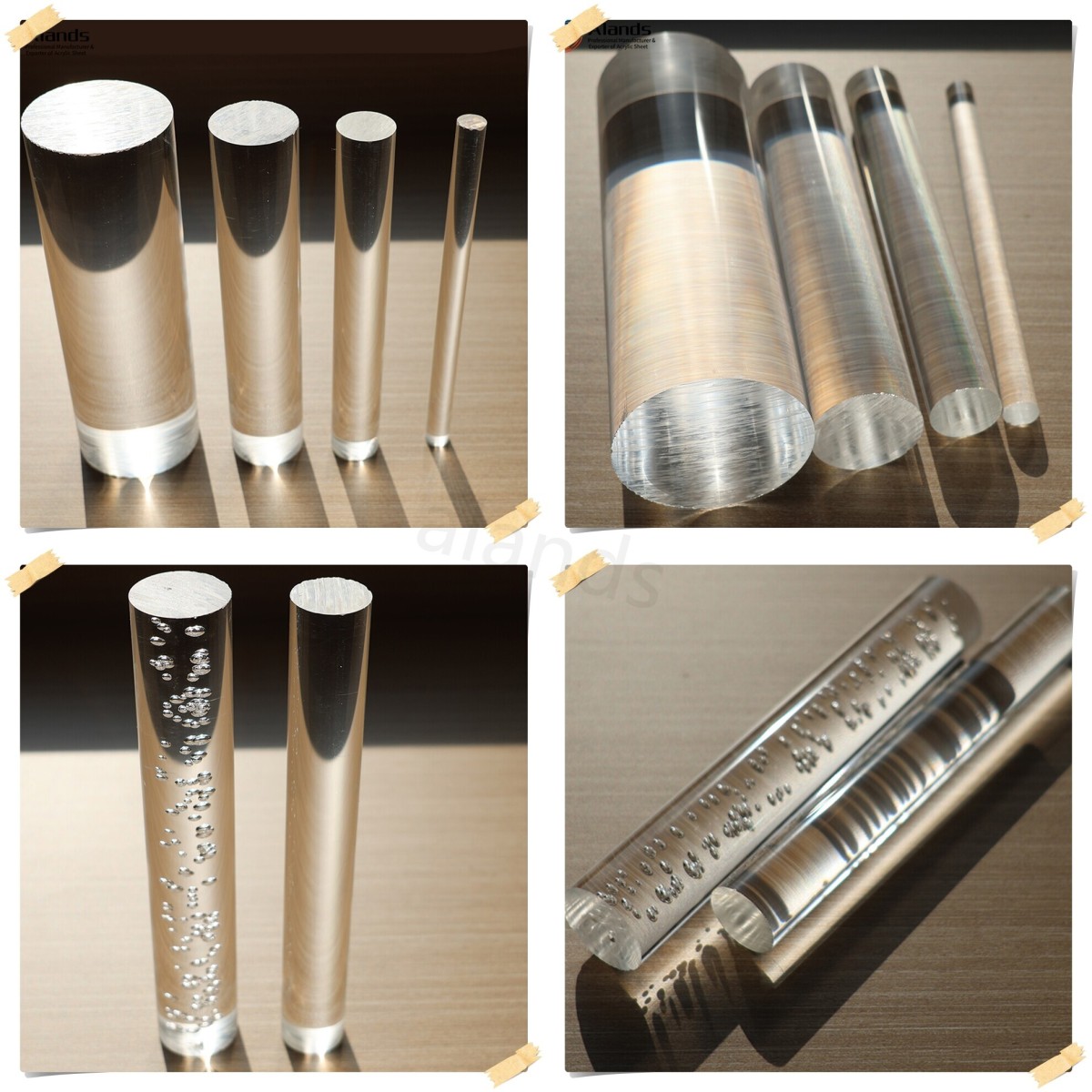
The rods vary greatly in diameter. Acrylic rods can be made in a wide range of sizes, from millimeters to several centimeters. Larger rods tend to be used in lighting displays or structural decor; medium rods in decorative components or mechanical parts; and small rods in laboratory tools or optical demonstrations.
Internal Structure Differences: Clear vs. Bubble-Filled
Some rods contain evenly distributed bubbles. These “bubble acrylic rods” are often used in decorative lighting, artistic installations and aquarium designs. Clear, bubble-free rods are preferred in optical applications, light-guiding devices and precision components.
Surface Processing Differences
Some rods have perfectly polished mirror-like surfaces, while others show fine machining marks or rough-cut ends. These differences indicate varied processing stages such as polishing, turning or ready-to-machine semi-finished stock.
How Transparent Acrylic Rods Are Manufactured
Extruded Acrylic Rods
Lower cost
Stable dimensions
Uniform density
Suitable for decorative and general industrial use. Optical properties are slightly lower than cast acrylic.
Cast Acrylic Rods
Higher clarity
Better hardness
Suitable for special effects such as bubble rods
Used where optical performance or visual quality is important.
Common Applications of Acrylic Rods
Lighting
Acrylic rods work well with LEDs to create light guides, bubble columns and ambient lighting designs because they diffuse and refract light effectively.
Architecture and Interior Design
Transparent rods serve as decorative pillars, partitions and sculptural materials in commercial environments and exhibitions.
Industrial Applications
Their light weight, machinability and moderate strength make them useful for instrument parts, jigs, fixtures and transparent observation windows.
Education and Scientific Research
Acrylic rods are ideal for demonstrating optical phenomena such as refraction, internal reflection and light guidance. They are also used in fluid observation devices.
How to Identify High-Quality Acrylic Rods
Indicators of quality also include impurity-free transparency, smooth crack-free ends, uniform surfaces without waves and resistance to yellowing under sunlight.
Conclusion
The rods shown represent a variety of acrylic rod types differing in diameter, internal structure and processing quality. Acrylic rods are valued across lighting, optical systems, industrial components, education and decorative fields for their clarity, durability and ease of fabrication.
If you want, I can further:
• Optimize for SEO keywords
• Expand into a long technical article
• Adapt into product descriptions or marketing material
Contact Us
If you have any enquiry about quotation or cooperation, please feel free to use the following enquiry form. Our sales representative will contact you within 24 hours. Thank you for your interest in our products. "*" Indicates the Fields are Mandatory
Related Posts
Request A Quote! We'll respond as soon as possible(within 12 hours)
Leave A Message