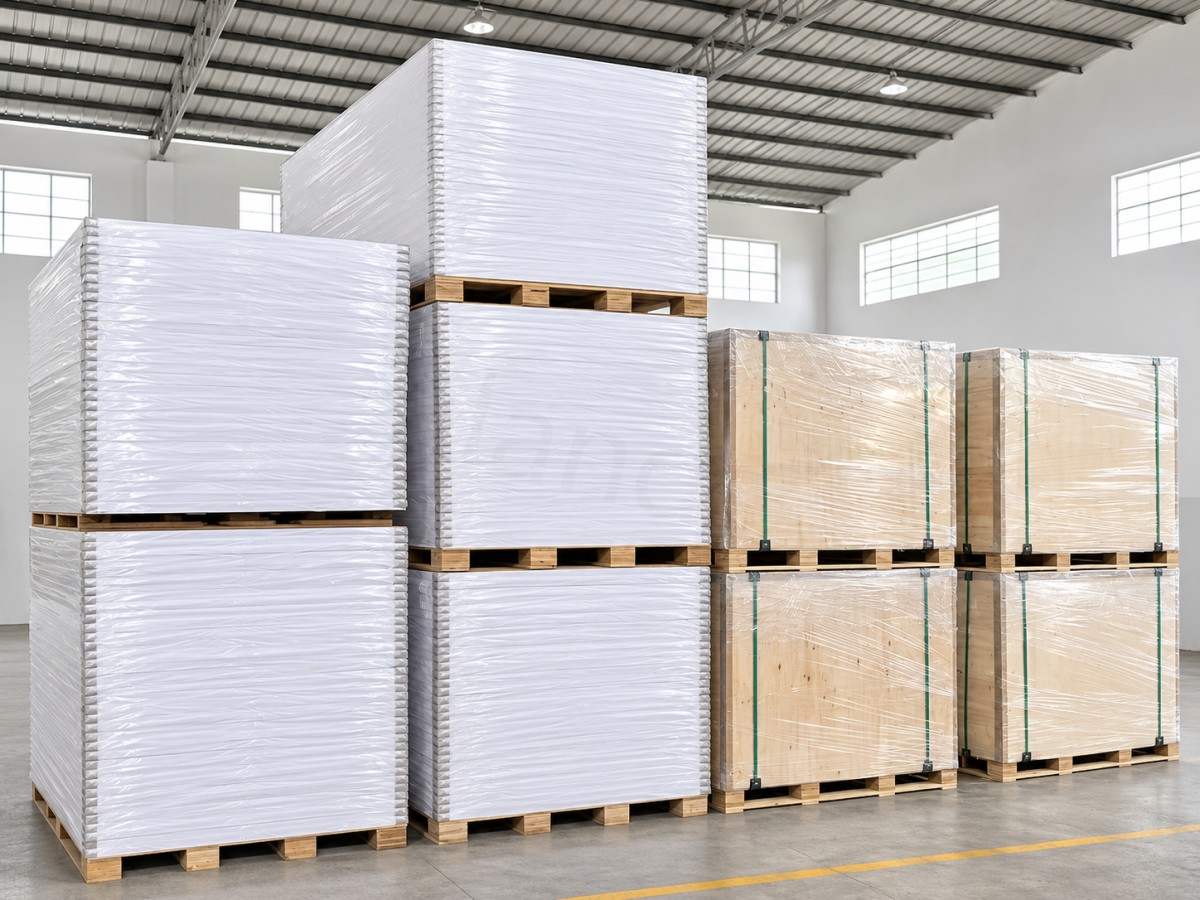
PVC Foam Board Density and Weight: Chart, Calculation & Buying Guide
PVC foam board density directly affects sheet weight, material consumption, and purchasing costs. Different applications, from sign making and printing to furniture manufacturing and interior decoration, require specific combinations of density and thickness.
Standard PVC foam boards commonly have densities ranging from 0.50 to 0.65 g/cm³. For example, an 18mm thick sheet measuring 1220 × 2440mm weighs approximately 26.79 kg at a density of 0.50 g/cm³, compared with 34.83 kg at 0.65 g/cm³—a difference of 8.04 kg per sheet.
Knowing the sheet dimensions, thickness, and density allows buyers to compare product specifications, calculate order weights, and evaluate supplier quotations accurately.

What Is the Density of PVC Foam Board?
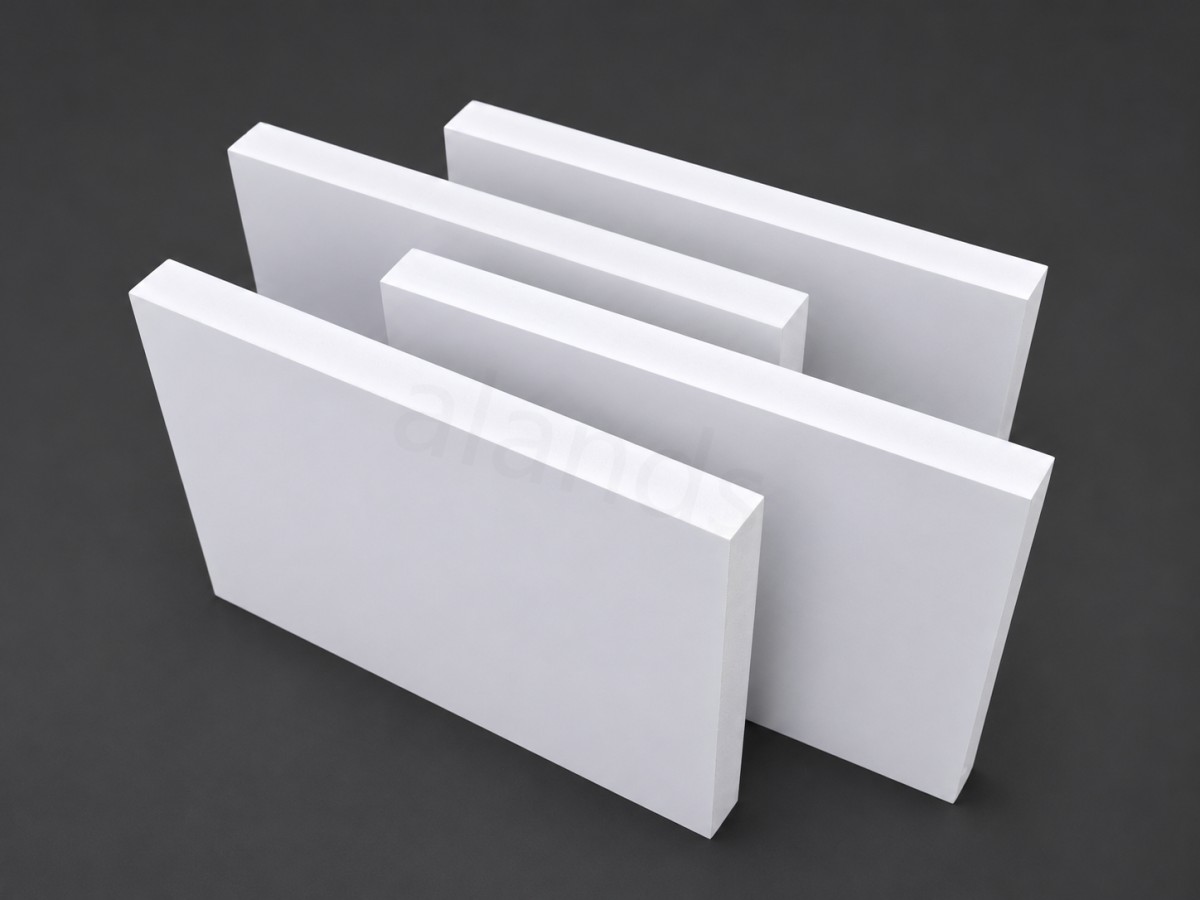
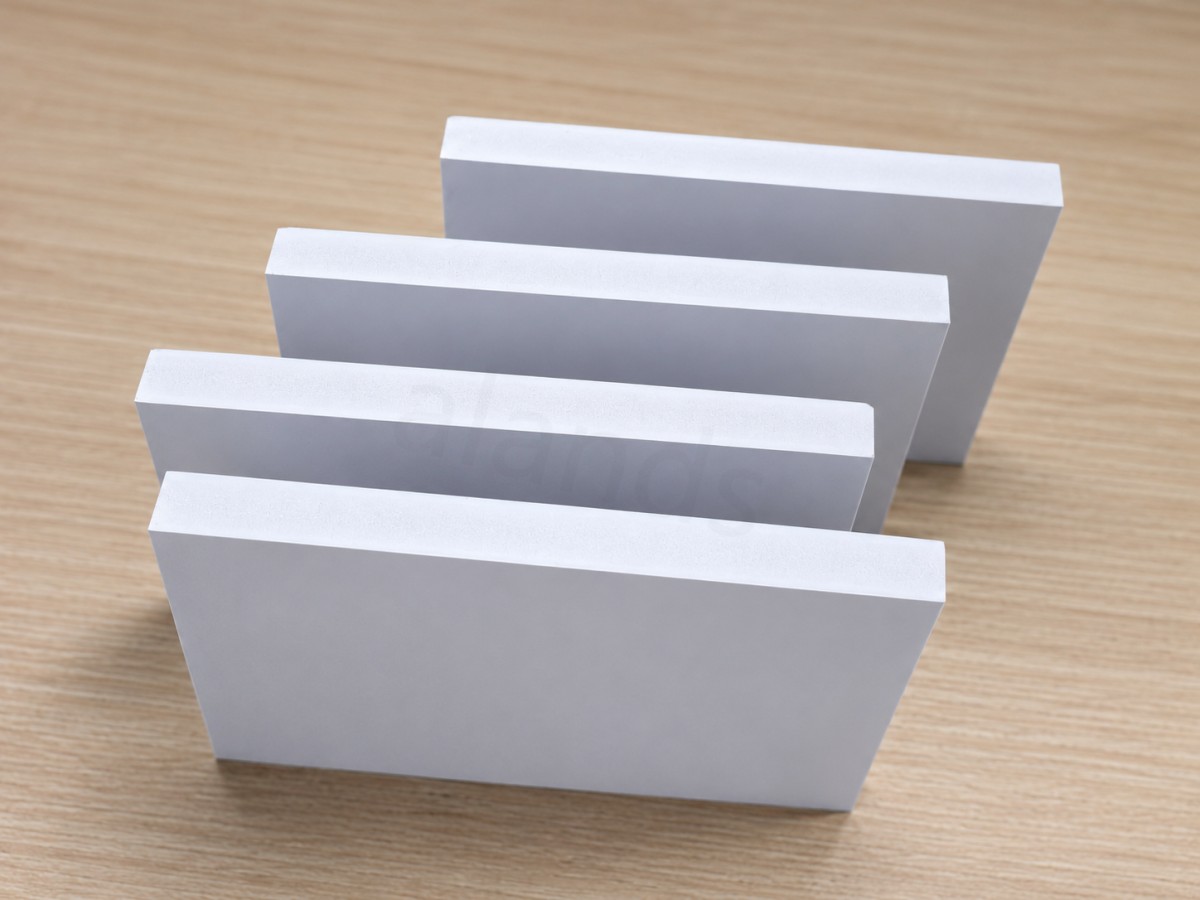
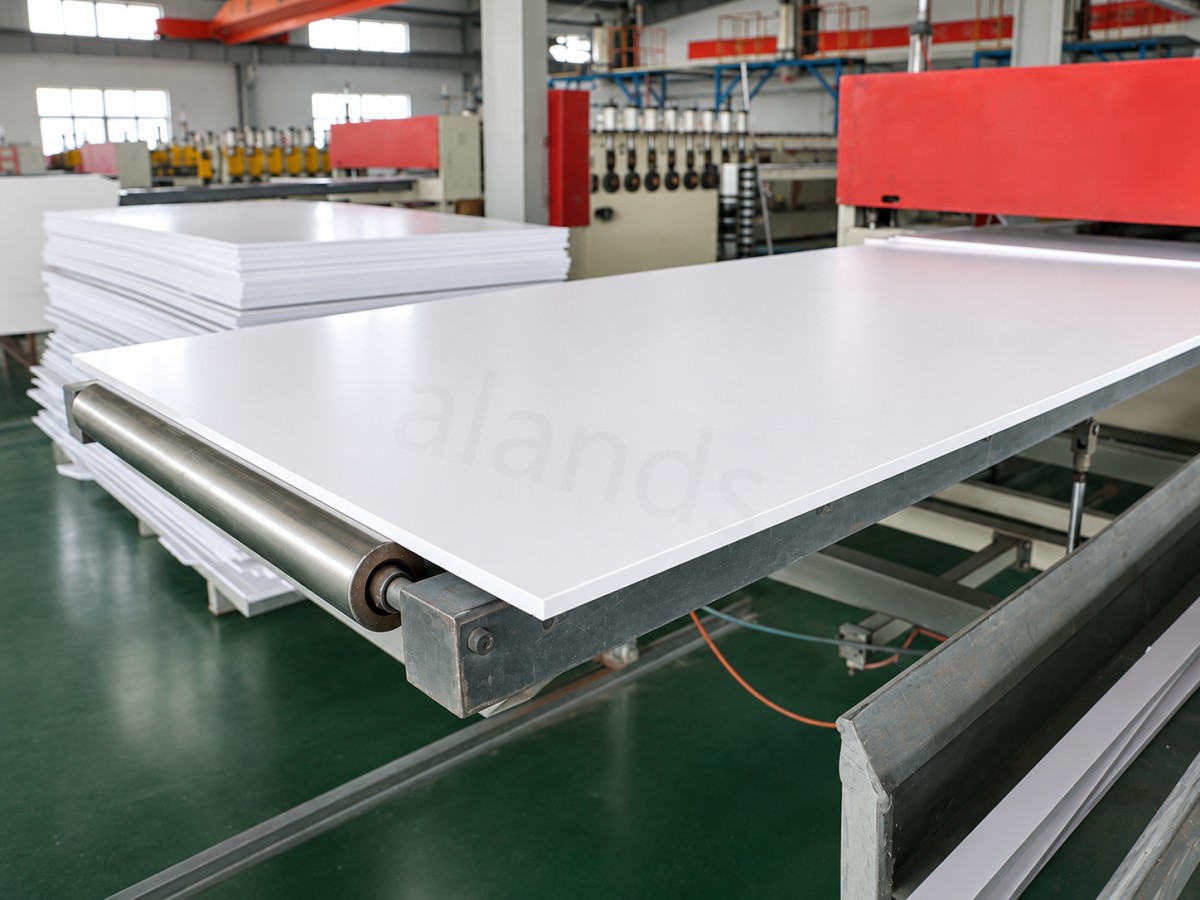
PVC foam board is manufactured from polyvinyl chloride (PVC) using a foaming process that creates a cellular structure inside the material. This structure gives foam board a lower overall density than solid PVC sheets.
Density is measured in grams per cubic centimeter (g/cm³) or kilograms per cubic meter (kg/m³). It represents the mass of material per unit of volume.
| Density (g/cm³) | Density (kg/m³) | Typical Applications |
|---|
| 0.45 | 450 | Lightweight display panels |
| 0.50 | 500 | Sign making, printing, display boards |
| 0.55 | 550 | Advertising, interior decoration, general fabrication |
| 0.60 | 600 | Decorative panels, partitions, furniture components |
| 0.65 | 650 | Furniture panels, cabinets, fabricated parts |
| 0.70 | 700 | Higher-density furniture and custom fabrication |
For boards manufactured using comparable formulations and production processes, higher density means more material per unit of volume.
Density is an important specification when evaluating sheet weight, fabrication performance, and material costs.
Alands supplies
PVC foam boards with commonly used densities of 0.50–0.65 g/cm³ for signage, interior applications, and furniture manufacturing.
PVC Foam Board Weight Chart (1220 × 2440mm)
The
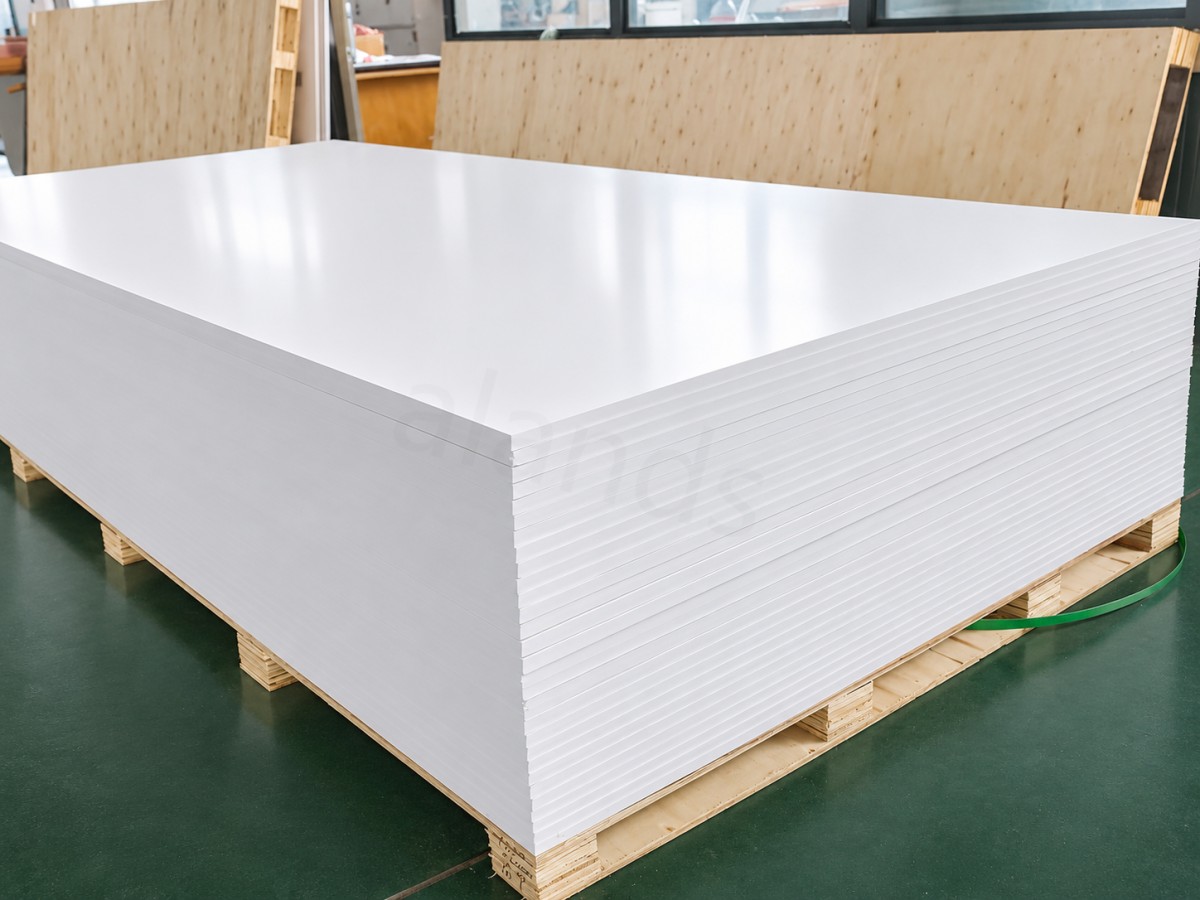
1220 × 2440mm sheet is a widely used standard size, approximately equivalent to 4 × 8 feet, with a surface area of 2.9768 m².
The following chart shows the theoretical weight of PVC foam boards from 3mm to 20mm thick at four density levels.
PVC Foam Board Weight per Sheet (kg)
| Thickness | 0.50 g/cm³ | 0.55 g/cm³ | 0.60 g/cm³ | 0.65 g/cm³ |
|---|
| 3mm | 4.47 | 4.91 | 5.36 | 5.80 |
| 5mm | 7.44 | 8.19 | 8.93 | 9.67 |
| 8mm | 11.91 | 13.10 | 14.29 | 15.48 |
| 10mm | 14.88 | 16.37 | 17.86 | 19.35 |
| 12mm | 17.86 | 19.65 | 21.43 | 23.22 |
| 15mm | 22.33 | 24.56 | 26.79 | 29.02 |
| 18mm | 26.79 | 29.47 | 32.15 | 34.83 |
| 20mm | 29.77 | 32.74 | 35.72 | 38.70 |
All weights are calculated for 1220 × 2440mm sheets using nominal thickness and average density. Figures represent theoretical net sheet weight, excluding protective film and shipping packaging.
How Much Does an 18mm PVC Foam Board Weigh?
18mm PVC foam board is widely used in furniture manufacturing, cabinetry, and interior partition systems.
For a standard 1220 × 2440mm sheet:
0.50 g/cm³:
26.79 kg per sheet0.55 g/cm³:
29.47 kg per sheet0.60 g/cm³:
32.15 kg per sheet0.65 g/cm³:
34.83 kg per sheet
For an order of 100 sheets, the difference between 0.50 and 0.65 g/cm³ density amounts to approximately 804 kg.
This weight difference affects total material weight, handling requirements, and shipping weight calculations for bulk orders.
How to Calculate PVC Foam Board Weight
Calculating PVC foam board weight requires four measurements: length, width, thickness, and density.
PVC Foam Board Weight Formula
Weight (kg) = Length (mm) × Width (mm) × Thickness (mm) × Density (g/cm³) ÷ 1,000,000
Example: 18mm PVC Foam Board
Sheet specifications:
- Length: 2440mm
- Width: 1220mm
- Thickness: 18mm
- Density: 0.55 g/cm³
Calculation:
2440 × 1220 × 18 × 0.55 ÷ 1,000,000
Weight per sheet: 29.47 kg
For an order of 100 sheets:
29.47 × 100 = 2,947 kg
The total theoretical net weight is approximately 2.95 metric tons.
For export shipments, the gross shipping weight must also include wooden pallets, protective wrapping, corner protectors, and other packaging materials.
PVC Foam Board Weight per Square Meter
For projects measured in square meters, use the following formula:
Weight (kg/m²) = Thickness (mm) × Density (g/cm³)
For example, a 10mm PVC foam board with a density of 0.60 g/cm³:
This calculation is useful for wall cladding, interior partitions, and custom-cut sheet orders.
PVC Foam Board Density: 0.50 vs. 0.60 g/cm³
Densities of 0.50 and 0.60 g/cm³ are common specifications in PVC foam board purchasing.
The main differences are material mass, sheet weight, and intended applications.
| Specification | 0.50 g/cm³ | 0.60 g/cm³ |
|---|
| 10mm sheet weight | 14.88 kg | 17.86 kg |
| 18mm sheet weight | 26.79 kg | 32.15 kg |
| Relative weight | Baseline | 20% heavier |
| Product category | Lightweight board | Medium-to-high-density fabrication board |
| Common applications | Signs, displays, decoration | Furniture, partitions, CNC fabrication |
| Purchasing priority | Weight and cost efficiency | Rigidity and fabrication performance |
Weight figures are based on 1220 × 2440mm sheets.
0.50 g/cm³: Signage and Lightweight Applications
PVC foam board with a density of 0.50 g/cm³ is suitable for indoor signs, exhibition displays, decorative backgrounds, and lightweight panel applications.
Its lower weight simplifies handling, cutting, and installation, particularly for large-format display projects.
For advertising panels with adequate backing support, 0.50 g/cm³ is a practical and economical specification.
0.60 g/cm³: Furniture and Sheet Fabrication
PVC foam board with a density of 0.60 g/cm³ is commonly selected for furniture components, interior partitions, CNC routing, and cabinet fabrication.
When comparing boards produced with similar formulations and manufacturing processes, increased density improves material compactness and supports better surface hardness, machined-edge quality, and local fastening performance.
Furniture manufacturers should also specify sheet thickness, support span, fastening methods, and load requirements when selecting materials.
How to Choose PVC Foam Board Density and Thickness
Density determines the mass of material per unit of volume, while thickness determines the sheet's cross-sectional dimensions.
Both specifications are essential when selecting boards for different applications.
| Application | Recommended Thickness | Reference Density |
|---|
| Signage and UV printing | 3–5mm | 0.50–0.60 g/cm³ |
| Exhibition displays | 5–10mm | 0.50–0.60 g/cm³ |
| Interior wall panels | 5–12mm | 0.55–0.65 g/cm³ |
| Interior partitions | 8–15mm | 0.55–0.65 g/cm³ |
| Furniture components | 12–18mm | 0.55–0.65 g/cm³ |
| Cabinet panels | 15–20mm | 0.60–0.70 g/cm³ |
These specifications provide a starting point for material selection. Final requirements depend on structural design, load conditions, fastening methods, and fabrication processes.
Sign Making and UV Printing
Important purchasing specifications include surface flatness, color consistency, print compatibility, and batch uniformity.
For temporary displays and promotional projects, sheet weight and material cost are key considerations.
Interior Decoration and Partitions
8–12mm PVC foam boards are used in selected interior partition and decorative panel applications.
Buyers should check thickness tolerance, surface flatness, and fastening requirements.
For large-area installations, calculating weight per square meter also helps determine panel-handling requirements and supporting structures.
Furniture and Cabinet Manufacturing
Key requirements include panel rigidity, surface hardness, machined-edge quality, and screw-holding performance.
Besides average density, the internal cell structure and manufacturing process should form part of the product evaluation.
Free Foam vs. Celuka PVC Foam Board
PVC foam boards are manufactured using different foaming processes that produce distinct surface and internal structures.
Free Foam PVC Board
Free foam PVC board has a cellular structure designed for lightweight performance and easy fabrication.
Common applications include:
- Advertising and digital printing
- Exhibition displays
- Interior decoration
- Sign manufacturing
Purchasing inspections focus on surface finish, thickness consistency, and cutting performance.
Celuka PVC Foam Board
Celuka PVC foam board has a relatively dense outer skin combined with a foamed inner core.
This structure provides a firmer surface while retaining the weight advantages of a cellular core.
Typical applications include:
- Furniture and cabinet panels
- Cabinet doors and components
- Interior decorative panels
- CNC-machined parts
For furniture and cabinetry, key specifications include skin structure, screw-holding performance, and machined-edge quality.
Free foam and Celuka boards with the same average density have different surface and internal structures.
The manufacturing process should therefore be identified in the purchasing specification rather than relying on density alone.
Why Do PVC Foam Boards of the Same Thickness Have Different Weights?
Two PVC foam boards labeled 18mm can have different weights even when supplied in the same nominal size.
Three factors account for these differences.
1. Density Differences
Density is the primary factor affecting the weight of sheets with identical dimensions.
For a 1220 × 2440 × 18mm board, increasing density from 0.50 to 0.60 g/cm³ increases the theoretical weight from 26.79 kg to 32.15 kg.
2. Thickness and Dimensional Tolerances
Actual sheet thickness affects material volume and total weight.
For example, a 1220 × 2440mm PVC foam board with a density of 0.60 g/cm³ has the following theoretical weights:
| Actual Thickness | Weight per Sheet |
|---|
| 17.5mm | 31.26 kg |
| 18.0mm | 32.15 kg |
| 18.5mm | 33.04 kg |
A thickness difference of 0.5mm changes the theoretical weight by approximately 0.89 kg.
Accurate product comparisons should therefore use measured sheet dimensions and thickness.
3. Foaming Process and Material Formulation
Different foaming processes and formulations produce different cellular structures, densities, and mechanical properties.
For bulk orders, buyers should include board type, thickness tolerance, density range, and fabrication requirements in the technical specification.
This establishes consistent inspection criteria across production batches.
How to Check PVC Foam Board Density
PVC foam board density can be calculated from a sample's measured dimensions and net weight.
The inspection requires the sample's length, width, thickness, and weight.
Density Calculation Formula
Density (g/cm³) = Weight (kg) × 1,000,000 ÷ [Length (mm) × Width (mm) × Thickness (mm)]
For example, a PVC foam board sample measures:
- Length: 200mm
- Width: 200mm
- Thickness: 10mm
- Net weight: 240g (0.24kg)
Calculation:
0.24 × 1,000,000 ÷ (200 × 200 × 10)
Calculated average density: 0.60 g/cm³
Remove protective film before weighing and use actual measured dimensions in the calculation.
For bulk orders, collect samples from different sheets and positions, record their measured thickness and weight, and compare the results with the agreed density specifications.
Density measurements help verify material consistency. Surface hardness, flexural strength, and screw-holding capacity should be evaluated using their respective performance tests.
Key Specifications for Bulk PVC Foam Board Purchasing
Importers, distributors, and furniture manufacturers benefit from clearly defined product specifications.
A complete purchasing specification improves quotation accuracy and establishes consistent inspection standards.
| Purchasing Parameter | Example |
|---|
| Board type | Free Foam / Celuka |
| Sheet size | 1220 × 2440mm |
| Thickness | 5mm / 10mm / 18mm |
| Density | 0.55 / 0.60 / 0.65 g/cm³ |
| Color | White, black, or custom colors |
| Surface requirements | Flatness, protective film, printing or fabrication finish |
| Inspection criteria | Thickness tolerance, density range, surface quality |
| Order quantity | Number of sheets or total weight |
Comparing Prices per Sheet and per Kilogram
When comparing PVC foam board quotations, buyers should confirm the density and net weight of each supplier's products.
Consider two 1220 × 2440 × 18mm boards:
- Density 0.50 g/cm³: 26.79 kg per sheet
- Density 0.60 g/cm³: 32.15 kg per sheet
The second board contains 20% more material by weight at the same nominal dimensions.
For quotations priced per sheet, compare density, sheet weight, and fabrication performance.
For quotations priced per kilogram, verify actual thickness, density, surface quality, and manufacturing process.
A meaningful price comparison starts with matching product specifications.
Frequently Asked Questions About PVC Foam Board Density and Weight
1. What is the standard density of PVC foam board?
Common PVC foam board densities range from 0.50 to 0.65 g/cm³, equivalent to 500–650 kg/m³.
Lightweight display panels and higher-density fabrication boards are also available in other density grades.
2. How much does an 18mm PVC foam board weigh?
For a 1220 × 2440 × 18mm sheet, theoretical weights are:
- 0.50 g/cm³: 26.79 kg
- 0.55 g/cm³: 29.47 kg
- 0.60 g/cm³: 32.15 kg
- 0.65 g/cm³: 34.83 kg
3. How much does 5mm PVC foam board weigh per square meter?
A 5mm PVC foam board weighs 2.5 kg/m² at a density of 0.50 g/cm³ and 3.0 kg/m² at 0.60 g/cm³.
4. What is the weight difference between 0.50 and 0.60 density PVC foam board?
At identical dimensions and thickness, a 0.60 g/cm³ board is 20% heavier than a 0.50 g/cm³ board.
For 1220 × 2440 × 10mm sheets, the theoretical weights are 14.88 kg and 17.86 kg, respectively.
5. Can PVC foam board density be checked by weighing the sheet?
Yes. Measure the sheet's net weight, length, width, and thickness, then divide its mass by its volume to calculate average density.
For bulk inspection, use the sampling procedure and tolerance limits agreed in the purchase contract.
6. What density of PVC foam board is suitable for furniture?
A density of 0.60–0.70 g/cm³ is a useful starting range for furniture and cabinet applications.
Final selection should account for panel thickness, cabinet construction, fastening methods, and load requirements.
Buy PVC Foam Board in Bulk from Alands
Alands supplies
PVC foam boards for sign making, furniture manufacturing, interior decoration, and general fabrication.
Common sheet dimensions include 1220 × 2440mm, with thickness options such as 3mm, 5mm, 8mm, 10mm, 15mm, 18mm, and 20mm.
Customers can select suitable density, thickness, and surface specifications according to their applications and purchasing requirements.
For wholesale orders, Alands assists buyers in calculating sheet weight, total order net weight, and packaging requirements based on the selected dimensions, density, and quantity.